





Introduction to Ball transfer bearings
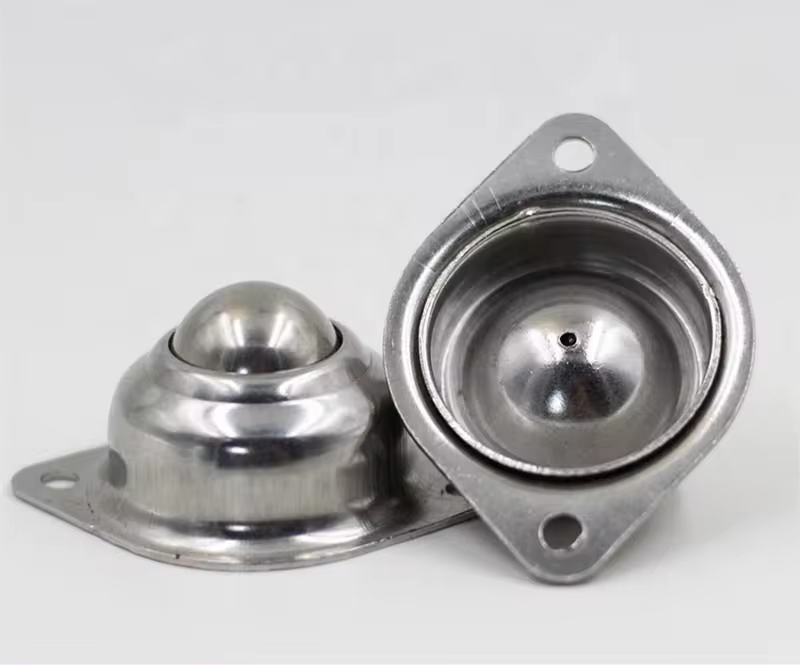
Ball transfer bearings are crucial components in material handling and conveyor systems. These bearings enable the omnidirectional movement of goods, providing flexibility and ease of transportation. They consist of a large load-bearing ball sitting atop smaller support balls, all housed within a casing. Selecting the right materials for these components is essential to ensure durability, efficiency, and cost-effectiveness. This article provides an in-depth look at the materials commonly used in manufacturing ball transfer bearings, highlighting their advantages and applications.
Steel in Ball Transfer Bearings
Properties and Advantages of Steel
Steel is a traditional and widely used material in the production of ball transfer bearings. It offers excellent strength and durability, making it suitable for applications requiring high load-bearing capacities. Steel bearings can handle loads up to 1,470 N, providing robust support for heavy goods in industrial settings.
Performance in Various Conditions
Steel bearings are ideal for environments where strength and wear resistance are a priority. While they excel in dry conditions, regular lubrication is necessary to prevent corrosion and extend their lifespan. These bearings are often used in high-load applications such as conveyor systems and assembly lines.
Stainless Steel: A Versatile Material
Corrosion Resistance and Durability
Stainless steel is a preferred choice for ball transfer bearings due to its excellent corrosion resistance. This material is particularly effective in environments exposed to moisture or corrosive substances, such as saltwater, alkalis, or bases. As a result, it is widely used in maritime and industrial applications where exposure to harsh conditions is a concern.
Cost-Effectiveness
Compared to other materials, stainless steel offers a balanced combination of performance and cost. It is more affordable than specialized materials like borosilicate glass while still providing reliable performance in demanding environments. Stainless steel bearings are commonly utilized in logistics and production automation to optimize material flow.
Glass Balls for Specialized Needs
Applications of Soda-Lime Glass
Glass balls are utilized in ball transfer bearings when metal-free solutions are required. Soda-lime glass, a mass-produced material, offers good chemical resistance and is cost-effective. It is suited for applications where short-term chemical exposure is a concern but high thermal loads are not expected. This type of glass is often used in food processing and pharmaceutical industries.
Borosilicate Glass for High Chemical Resistance
Borosilicate glass provides even greater chemical resistance than soda-lime glass, making it suitable for applications involving strong acids. Despite its higher cost, it is favored in settings where chemical stability and transparency are crucial. This glass finds applications in laboratories and chemical processing facilities.
Ceramic Balls in Advanced Applications
Aluminium Oxide Ceramics
Aluminium oxide, known for its polycrystalline structure, offers exceptional corrosion, abrasion, and heat resistance. These ceramic balls are used in settings exposed to water, salt solutions, and some acids, except for strong alkaline solutions. They are self-lubricating and serve as electrical insulators, making them ideal for electronic and high-temperature applications.
Silicon Nitride for Toughness and Insulation
Silicon nitride balls provide high toughness and excellent resistance to temperature fluctuations. While more expensive than aluminium oxide, they are favored for their insulating properties and durability under extreme conditions. Their applications include aerospace and high-precision machinery.
Plastic Materials in Ball Transfer Bearings
Advantages of High-Performance Plastics
High-performance plastics, such as POM and iglidur® J3B, are increasingly used in ball transfer bearings for their lightweight and wear-resistant properties. These materials are ideal for applications requiring a combination of low maintenance and corrosion resistance.
Use in Light Applications
Plastic bearings are suitable for light-duty applications, providing an economical solution with a durable lifecycle. They are commonly found in office equipment, packaging machinery, and conveyor systems where weight and friction reduction are important.
Material Selection Criteria
Load-Bearing Capacity
The choice of material for ball transfer bearings is heavily influenced by the required load-bearing capacity. Steel and stainless steel are preferred for heavy-duty applications, while plastics and glass are used for lighter loads and specialized conditions.
Environmental Considerations
Environmental factors, including temperature, moisture, and chemical exposure, play a crucial role in material selection. Stainless steel and ceramics are chosen for corrosive environments, while plastics are suitable for dry and clean conditions.
Ball Transfer Units in Various Industries
Industrial Applications
Ball transfer units are essential in industries such as manufacturing, logistics, and mechanical engineering. They facilitate the smooth movement of goods on conveyor systems, assembly lines, and automated storage systems, enhancing productivity and efficiency.
Use in Public Facilities
Beyond industrial settings, ball transfer bearings are employed in public facilities like airports and shopping centers to ease the movement of luggage and trolleys. Their omnidirectional capability simplifies navigation in crowded spaces.
Innovations in Ball Transfer Bearings
Advancements in Material Technology
Recent innovations focus on the development of materials that offer improved performance while reducing maintenance requirements. High-performance plastics and ceramics are at the forefront, offering solutions that meet the demands of modern industrial environments.
Customization and Flexibility
Manufacturers now offer customizable ball transfer units to address specific customer needs. This flexibility ensures that bearings can be tailored for unique applications, including non-standard sizes and load capacities. The purpose is to meet the diverse requirements of industries worldwide, including those in China and wholesale markets.
Conclusion: Future of Ball Transfer Bearings
The future of ball transfer bearings lies in continued material innovation and customization to meet evolving industrial demands. As global supply chains become more complex, the need for efficient material handling solutions will grow. Manufacturers must continue to push the boundaries of technology to provide bearings that are both durable and adaptable to various environments.
Olelon Technology Provide Solutions
Olelon Technology offers advanced ball transfer bearing solutions tailored to fit diverse industrial applications. Our products, manufactured with precision and expertise, provide efficient material handling in both light and heavy-duty settings. By utilizing high-performance materials like ceramics and plastics, Olelon Technology ensures that our bearings deliver exceptional durability and performance even in challenging environments. Whether you’re in China or seeking wholesale options, our innovative solutions are designed to optimize your operational efficiency and reduce maintenance requirements. Contact Olelon Technology for customized solutions that meet your unique material handling needs.
Post time: 2025-06-29 15:22:06